
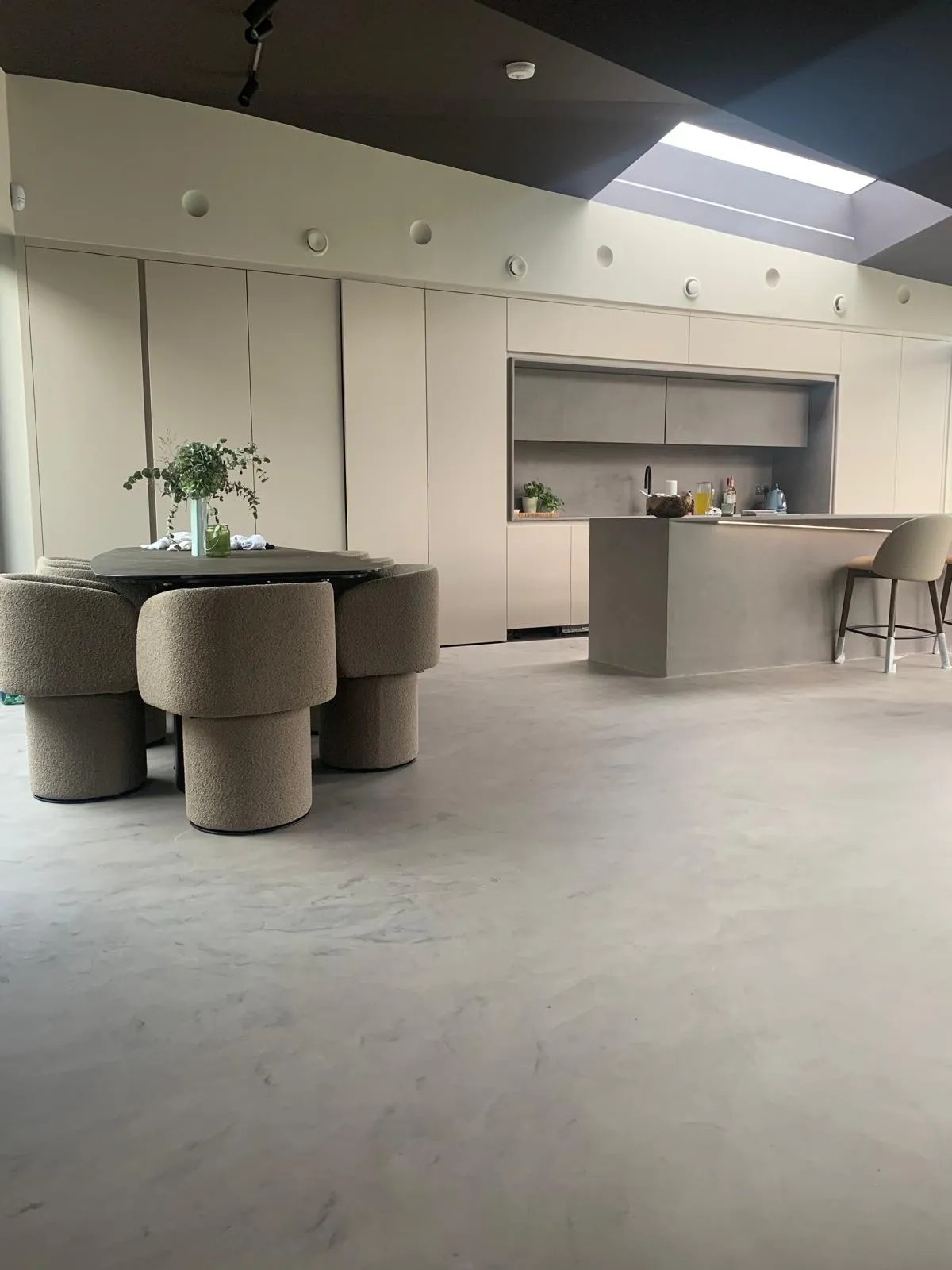
Microcement
Seamless floors, walls and worktops.
What is microcement?
A thin, cement-based coating applied by hand. At just 2–3mm it goes directly over existing tiles, concrete, plasterboard and most stable substrates — no grout lines, no joints, no full strip-out.
Made from cement, water-based resins, mineral pigments and fine aggregates, it gives a monolithic finish that makes a space feel larger and more cohesive — in matte, satin or high gloss.
Where it works
Floors
Our most popular application. One continuous surface that flows between rooms — ideal for hallways, kitchens and open-plan living.
Bathrooms & wet rooms
Fully waterproof once sealed. No grout lines means less mould and easier cleaning.
Kitchen worktops
A heat-resistant, durable alternative to stone or quartz, with a handcrafted character.
Walls
A smooth, tactile surface with subtle variation — as a feature wall or throughout a room.
How we apply it
1. Site visit
We assess the existing substrate and talk through your design and colour.
2. Prime & reinforce
The surface is primed and a fibreglass mesh laid for strength.
3. Layer by hand
Multiple coats are trowelled and sanded to build texture and tone.
4. Seal
A specialist polyurethane sealer protects against water, stains and wear. A typical room takes 4–5 days.
Our work
Frequently asked questions
Is microcement waterproof?
Yes. Once sealed it is highly water-resistant and suitable for bathrooms, wet rooms and kitchens.
Can it go over existing tiles?
Yes — directly over tiles, concrete, plasterboard and most existing surfaces, with no need to strip the room back.
Does microcement crack?
Applied correctly over a sound substrate with the right primer and mesh, cracking is extremely rare.
How do I maintain it?
A damp mop or cloth is all you need. Avoid abrasive cleaners, and reseal high-traffic areas every few years.
What colours and finishes are available?
A wide spectrum of colours in matte, satin or high gloss — from warm, earthy tones to cool industrial greys.